Neuronal Oscillations Group

Our group is interested in the cellular basis of information processing in the mammalian brain.

Department of Physiology, Development and Neuroscience · University of Cambridge

Our ambition is to elucidate the neural code for memory, i.e. how information is encoded, stored and retrieved in neuronal networks of the brain.

To that end, we study the rules of synaptic plasticity at the cellular and network levels during physiologically relevant network activity using electrophysiology, imaging techniques and optogenetic approaches.

Our objectives are:

  1. To understand the cellular basis for generation and propagation of network oscillations in the hippocampus and thalamocortical networks.
  2. To elucidate the rules for induction of synaptic plasticity during such network oscillations during development and in the adult.
  3. To gain insight into how information can be stored and retrieved as changes of synaptic weights in those network.
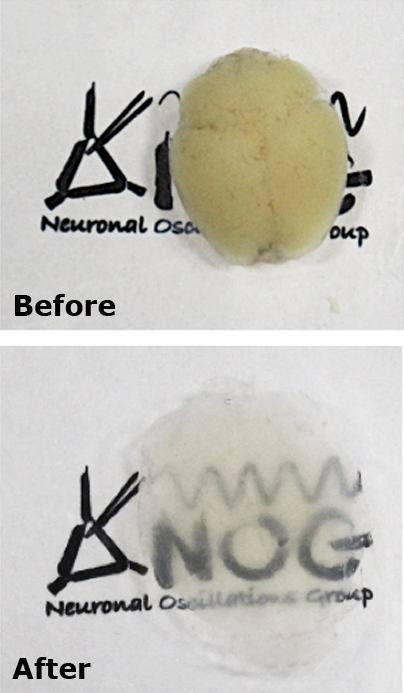
We use cutting edge methods such as CLARITY (pictured) to investigate neural circuitry.

News

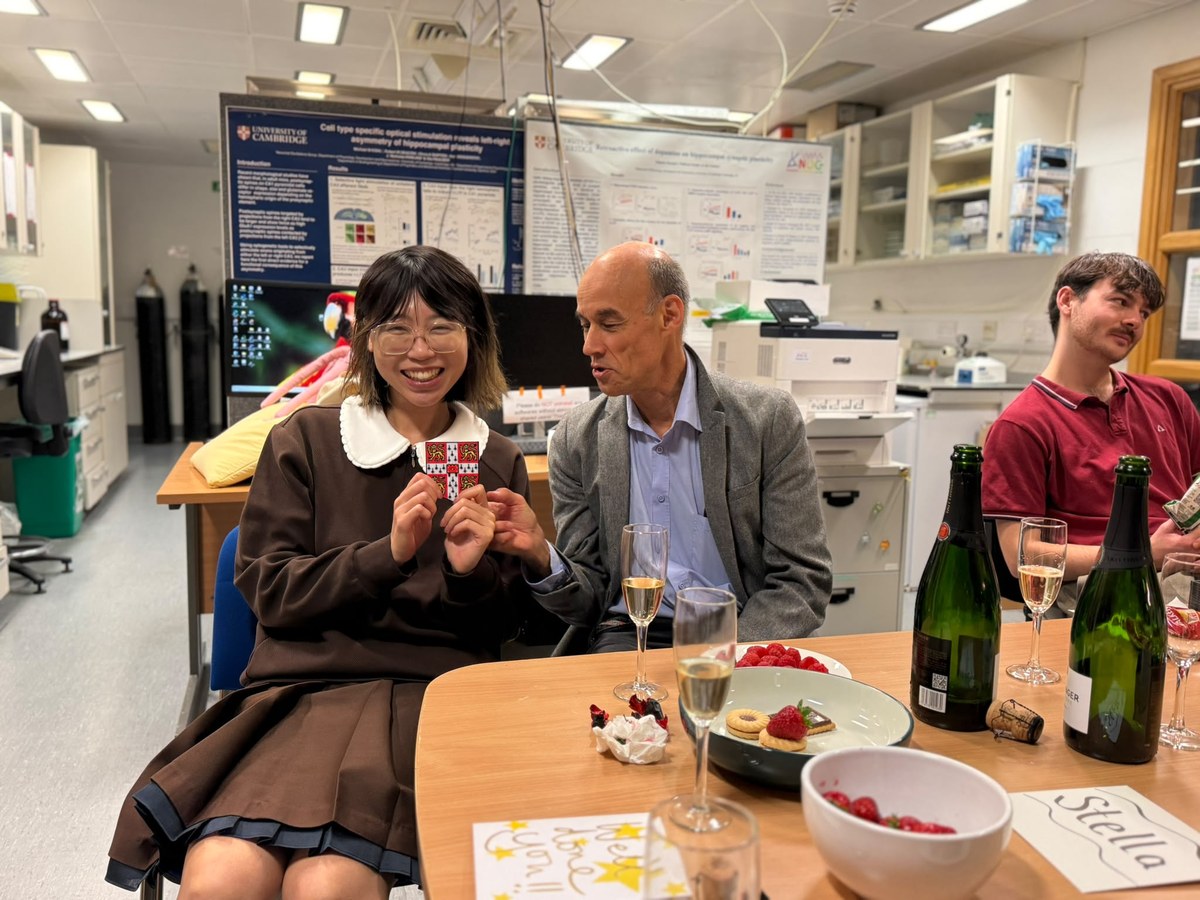
  • Congratulations to Stella Ma on passing her PhD viva!

    PhD

    Stella Ma holding a University of Cambridge crest, celebrating with Ole Paulsen in the lab
  • MRC grant to study presynaptic NMDA receptors in long-term depression

    Grant

    Ole Paulsen has been awarded a Medical Research Council research grant, Presynaptic NMDA receptors in hippocampal long-term depression in mice (April 2025 to October 2027). Synapses need NMDA receptors both to strengthen and to weaken. The project asks how the same receptor can do opposite things, looking at where the receptors sit and how they signal when hippocampal synapses weaken.

  • BBSRC grant on dopamine in hippocampal plasticity and memory

    Grant

    Ole Paulsen has been awarded a Biotechnology and Biological Sciences Research Council grant, Role of dopamine in hippocampal plasticity and hippocampus-dependent memory (April 2023 to March 2026). It asks how naturally released dopamine shapes synaptic plasticity in the mouse hippocampus, and whether dopamine is needed for new memories to form and to link them together.

  • Wellcome Collaborative Award: Inhibitory brain dynamics for adaptive behaviour

    Grant

    Ole Paulsen is one of eight investigators on a Wellcome Collaborative Award led by Zoe Kourtzi (January 2022 to January 2027), with colleagues in Cambridge, at UCL, Purdue University and the Howard Hughes Medical Institute. The programme studies how GABAergic inhibition regulates the brain network dynamics that support learning, bridging mice and humans, and local circuits and whole-brain networks.

  • BBSRC grant for Tanja Fuchsberger and Ole Paulsen on protein synthesis in dopamine-dependent plasticity

    Grant

    Tanja Fuchsberger is researcher co-investigator, with Ole Paulsen, on a Biotechnology and Biological Sciences Research Council grant, Dynamics of protein synthesis in dopamine-dependent hippocampal synaptic plasticity (July 2021 to June 2024): how dopamine tells neurons to make new proteins when a memory is stored, and how those proteins reach the synapses being strengthened. The work led to a paper in eLife in 2025.

All news →

The group

10 members across 4 roles.

See everyone →